Starlink: Transforming International Internet Access
Rahul
5th February 2025
SpaceX's Starlink satellite broadband service is revolutionizing how people connect to the digital world in a time when internet connectivity is as essential as electricity and water. Starlink, a disruptive force in global connection, was created to deliver high-speed broadband to isolated and underserved areas.
What is Starlink?
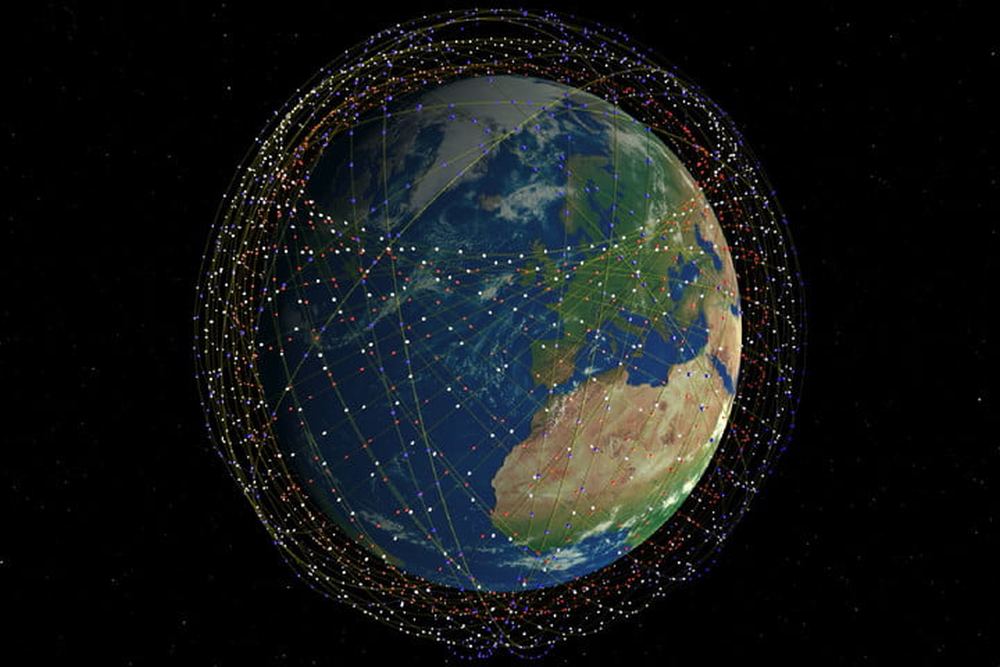
In order to provide internet services all across the world, Starlink is a constellation of low Earth orbit (LEO) satellites. Starlink's satellites orbit considerably closer to Earth than typical internet providers, which rely on fiber-optic cables or geostationary satellites. This lowers latency and speeds up internet. To increase coverage, the system's thousands of tiny satellites are constantly being launched.
How Starlink Operates?
Users access Starlink’s internet through a satellite dish, which connects to the nearest satellite in orbit. The data is then relayed to ground stations and back to the end user, ensuring seamless connectivity. The network is designed to minimize disruptions caused by weather conditions, making it more reliable than conventional satellite internet.
How Starlink Differs from Traditional Internet Connectivity?
Starlink operates differently from traditional internet services like fiber, DSL, and mobile networks. Here’s a comparison:
| Feature | Starlink (Satellite Internet) | Traditional Internet (Fiber/DSL/Mobile) |
| Technology | Low Earth Orbit (LEO) satellites
|
Fiber-optic cables, DSL, cell towers |
| Coverage | Global (even remote areas)
|
Limited to urban and developed areas |
| Speed | 50 Mbps - 250 Mbps (up to 500 Mbps for premium)
|
Varies (Fiber: 1 Gbps+, DSL: 10-100 Mbps, Mobile: 4G/5G speeds) |
| Latency | 20-40 ms (can improve with newer satellites)
|
Fiber: ~1-10 ms, DSL: 20-100 ms, 5G: ~10 ms |
| Setup | DIY kit with a satellite dish
|
Requires underground cables, ISP installation |
| Reliability | Affected by weather & obstructions
|
Fiber is stable; DSL and mobile depend on infrastructure |
| Portability | Can be used anywhere (Starlink Roam for travel)
|
Fixed to a location (except mobile data) |
| Cost | $599 hardware + $90-$120/month
|
Varies (Fiber: $30-$100/month, Mobile: $50+) |
| Infrastructure
|
No land-based infrastructure needed
|
Requires cables, towers, or exchanges |
| Best For | Rural, remote, and mobile users
|
Urban areas, businesses, and high-speed users |
Key Differences Explained
1. Satellite vs. Ground-Based Infrastructure
Starlink: Uses a constellation of satellites in Low Earth Orbit (~550 km).
Traditional Internet: Uses fiber-optic cables, telephone lines (DSL), or mobile towers for connectivity.
2. Coverage Area
Starlink: Provides global coverage, including rural and oceanic areas.
Traditional Internet: Limited to where infrastructure exists (fiber, DSL, or mobile networks).
3. Speed and Latency
Starlink: Faster than traditional satellite internet, but not as fast as fiber.
Fiber: Most stable with lowest latency (~1-10ms).
DSL/Mobile: Can be slower depending on location and congestion.
4. Reliability and Weather Sensitivity
Starlink: Performance can be affected by bad weather, obstructions (trees, buildings, mountains).
Fiber & DSL: More reliable, but fiber is the most stable.
Mobile networks: Can be unreliable in rural areas or during network congestion.
5. Portability and Mobility
Starlink Roam: Can be used anywhere, even on vehicles, ships, and airplanes.
Traditional Internet: Fixed connections (except mobile networks).
6. Cost Differences
Starlink: Higher upfront cost for hardware but no reliance on infrastructure.
Fiber & DSL: Cheaper monthly rates, but installation may take longer.
Which One is Better?
✅ Choose Starlink if you live in remote areas, travel frequently, or need global coverage.
✅ Choose Fiber/DSL if you need fast, stable, and affordable internet in cities or towns.
Benefits of Starlink
Starlink, SpaceX’s satellite internet service, offers several benefits, especially for users in remote or underserved areas. Here are some key advantages:
1. Global Coverage
Unlike traditional broadband, which relies on ground-based infrastructure, Starlink provides internet access almost anywhere on Earth.
Ideal for rural and remote locations where fiber or cable internet isn’t available.
2. High-Speed Internet
Offers download speeds between 50 Mbps to 250 Mbps for standard users and up to 500 Mbps for premium plans.
Lower latency (typically 20-40 ms) compared to traditional satellite internet services.
3. Quick and Easy Setup
The Starlink kit includes a self-installable dish, router, and power supply.
No need for complex installations or technicians—just plug in and connect.
4. Reliable in Disaster-Prone Areas
Works even during natural disasters, where terrestrial networks may fail.
Useful for emergency responders and disaster recovery efforts.
5. Useful for Mobile Applications
Starlink Roam (previously Starlink RV) allows users to access internet while traveling.
Starlink Maritime provides internet for ships and boats.
Starlink Aviation offers in-flight internet connectivity.
6. No Data Caps
Unlike many traditional ISPs, Starlink has no hard data limits for residential users.
7. Secure and Encrypted Network
Uses encryption for data transmission, reducing the risk of cyber threats.
8. Expanding Business and Military Uses
Businesses in remote locations can function efficiently with high-speed internet.
The military and governments use Starlink for secure communications and operations.
Criticism and Challenges Faced by Starlink
1. High Initial Cost
The Starlink kit (dish, router, cables, and power supply) costs around $599 for residential users and $2,500 for premium users, which is expensive compared to traditional broadband.
Monthly subscription fees are also higher than many fiber or cable internet providers.
2. Signal Disruptions and Performance Issues
Weather-sensitive: Heavy rain, snow, or thick cloud cover can affect signal quality.
Obstructions: Trees, buildings, and mountains can interfere with connectivity, requiring a clear line of sight to the sky.
3. Limited Availability in Urban Areas
Starlink is primarily designed for remote and rural users.
In crowded cities, fiber and 5G often provide better speeds and stability.
4. Space Debris and Collision Risks
With thousands of satellites in orbit, experts worry about space debris and the risk of collisions with other satellites or spacecraft.
Starlink plans to launch over 40,000 satellites, increasing concerns about space congestion.
5. Light Pollution and Impact on Astronomy
Astronomers criticize Starlink for bright satellite trails, which interfere with telescope observations and space research.
SpaceX has attempted to address this with darker coatings and visor tech, but concerns remain.
6. Regulatory and Geopolitical Issues
Some countries (like China, Russia, and India) have raised concerns over Starlink operating without local approvals.
Regulatory challenges in different nations slow down its global expansion.
7. Rural Coverage Still Evolving
Despite its promise, Starlink has long waitlists in some regions due to hardware shortages and network congestion.
Performance can vary in areas with high user demand.
8. Competition from 5G and Fiber
Fiber-optic and 5G networks offer faster, more stable, and often cheaper internet options in urban areas.
As these technologies expand, Starlink may lose some potential customers.
The Future of Starlink
Starlink, SpaceX’s satellite internet service, is rapidly evolving and expanding. Here’s what the future holds:
1. Expansion to Global Coverage
SpaceX aims to provide seamless internet access worldwide, including remote and underserved regions.
More satellite launches will enhance coverage, especially in the polar regions and deep oceans.
2. Faster Speeds and Lower Latency ⚡
Starlink plans to increase speeds beyond 1 Gbps as satellite technology improves.
The latency is expected to drop below 20 ms, making it competitive with fiber-optic networks.
3. Starlink V2 and Direct-to-Device Connectivity
Starlink V2 satellites will be larger, more powerful, and capable of direct connections to smartphones.
Collaboration with T-Mobile aims to bring text, voice, and basic data connectivity without cellular towers.
4. Affordable Pricing and Subsidized Plans
As production scales up, costs may decrease, making Starlink more affordable.
SpaceX is exploring government partnerships to offer Starlink to schools, rural communities, and disaster-stricken areas.
5. Advanced Laser Communication Between Satellites
Future satellites will feature inter-satellite laser links, reducing reliance on ground stations.
This will enable faster global communication, especially in remote areas.
6. Starlink for Military, Aviation, and Maritime Uses ✈️
Growing partnerships with airlines, cruise lines, and military organizations to provide high-speed internet.
Starlink Aviation and Maritime services are expanding globally.
7. Addressing Space Debris and Astronomy Concerns
SpaceX is working on darker coatings and automated collision avoidance systems to reduce risks.
Future satellites may deorbit more efficiently to minimize space junk.
8. Competition and Market Challenges
Competitors like Amazon’s Project Kuiper, OneWeb, and 5G networks could challenge Starlink’s dominance.
SpaceX must innovate constantly to stay ahead.
9. Mars and Deep Space Communication
Starlink could be a crucial part of Elon Musk’s vision for Mars colonization, providing interplanetary internet.
SpaceX may expand Starlink’s role in deep-space communication.
Conclusion
The future of Starlink is promising and ambitious, with potential advancements in speed, accessibility, and global connectivity. If successful, it could revolutionize the way the world connects to the internet.
Current Scenario of Starlink in India
As of February 2025, Starlink, SpaceX's satellite internet service, is not operational in India. The company is actively seeking regulatory approval to provide satellite broadband services in the country. However, recent incidents have raised security concerns, potentially affecting the approval process.
Recent Developments:
Device Seizures: In December 2024, Indian authorities seized Starlink devices from insurgents in Manipur and from smugglers in the Andaman and Nicobar Islands. These devices were reportedly used for communication and navigation purposes.
Regulatory Hurdles: Following these incidents, the Indian government has intensified scrutiny of Starlink's operations. The Ministry of Home Affairs has directed the Department of Telecommunications to investigate and take appropriate action. Starlink has been asked to provide details about the ownership of the seized devices but has cited data privacy laws in its refusal.
Official Statements: Elon Musk, CEO of SpaceX, stated that "Starlink satellite beams are turned off over India" and were "never on in the first place," emphasizing that the service is not active in the country.
Current Status
Starlink's application for a satellite communication license in India remains pending. The company must address security concerns and comply with regulatory requirements before it can commence operations. The timeline for approval and subsequent service launch is currently uncertain.
Views (26)
Comments (1)
Duration (1)





.jpeg)


 Facebook
 Instagram
 WhatsApp
 Linked in
 Twitter
 Reddit
Comments (1)
Write a CommentKaran T 05 February 25, 17:58
Good Information rahul and usefull.