Arattai vs WhatsApp which Messaging App Should You Choose in 2025
Madhurima Bhattacharjee
3rd October 2025
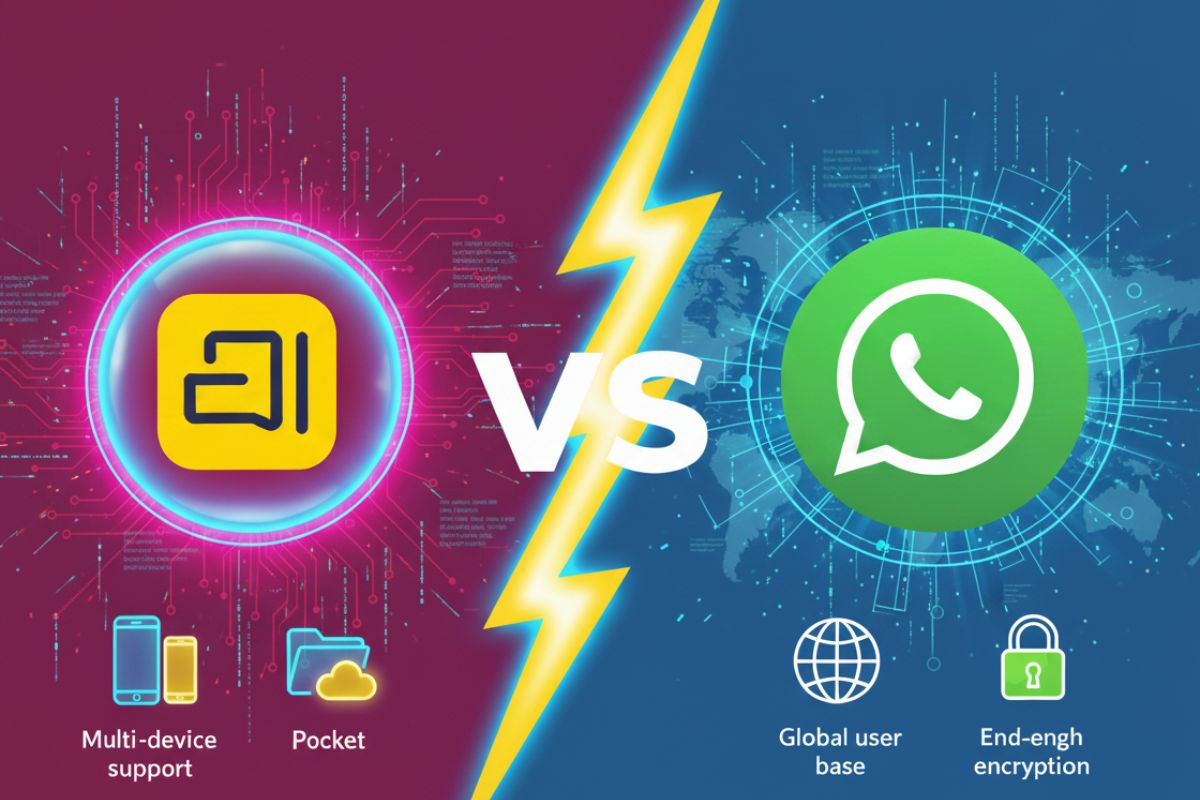
We live with our messages each day, and we depend on them for words that move between people and shape how we think about trust. The way an app handles a message tells us something about its values, and it teaches us how technology frames our human connections. This is where the debate begins, and it unfolds with care across two major contenders today. WhatsApp carries a world of users with long trust, and it holds onto habits formed across continents every single day. Arattai enters with promise and pride, and it arrives with a design built inside India with Zoho’s strength guiding the way. Both apps claim to connect, and both apps carry different weights that we must explore honestly. The choice is not simple, and the choice is layered with trust, privacy, reach, and purpose, all intertwined together. Let us walk carefully through these details, and let us uncover what each app can mean for our lives.
What makes WhatsApp and Arattai different?
Why is WhatsApp still the global leader?
WhatsApp runs with Meta, and it owns a vast network that shapes modern communication with steady force. Billions depend on it daily, and billions share messages without thinking, yet knowing the system will work. Its reach gives it power, and its consistency gives it authority when people measure reliability. It leads because it works, and it works because it listens carefully to evolving global needs. The global trust is not small, and the infrastructure is not weak by any measure of scale. When you open WhatsApp, you open into a crowd where almost everyone stands and participates freely.
Why is Arattai gaining attention in India?
Arattai grows quietly, and it grows firmly inside the Indian market that craves alternatives. It comes from Zoho, and it carries a local vision that emphasises independence and self-control. The name means chit-chat, and it speaks to roots that feel familiar for Indian users. Its appeal lies in privacy promises, and it lies in local data storage that protects national trust. Indians find meaning here, and Indians find control here when data sovereignty matters deeply. Arattai has climbed the charts in India, and it has claimed space where trust with Meta shakes and weakens. People search for a homegrown choice, and they find Arattai waiting with open claims of dignity.
How do the features of WhatsApp and Arattai compare?
Which app has better messaging tools?
Can you edit or delete messages?
WhatsApp gives you power, and it gives you a choice that improves communication quality. You can edit messages within fifteen minutes, and you can delete messages for everyone when mistakes occur. Arattai lets you delete, and it does not let you edit messages once sent. Editing is missing, and editing matters when words slip and create confusion.
How big are file and group limits?
WhatsApp lets you share two gigabytes, and it lets you add groups of one thousand twenty-four members together. Arattai gives you one gigabyte, and it allows groups of about one thousand people to be active. The numbers tell the truth, and the truth shows WhatsApp is more generous in limits.
What about voice and video calls?
Both apps handle calls, and both apps handle video interactions smoothly across devices. The difference lies in encryption. WhatsApp locks calls and chats, and Arattai locks only calls for now. The call flows smoothly, and the call works well across regions and devices. Yet the silence on chat encryption matters, and the silence leaves questions for cautious users.
Do both apps support HD media and voice notes?
WhatsApp supports HD photos and HD videos, and WhatsApp supports long voice notes that remain sharp. Arattai supports media, and it supports voice notes that carry meaning. Yet Arattai does not highlight HD toggles, and Arattai does not claim strong media quality like WhatsApp does. The gap is not wide, and the gap is still real in user experience.
Do they have Stories or Channels?
How do WhatsApp Communities differ from Arattai Channels?
WhatsApp offers Status, and WhatsApp offers Communities for group management. Communities bring groups under one hub, and Communities let admins control and direct. Arattai offers Stories, and Arattai offers Channels for sharing widely. Channels work as broadcasts, and Channels let creators share with clarity. The ideas overlap, and the ideas differ in scale depending on audience needs.
Which app among WhatsApp and Arattai is safer for privacy and security?
Do both apps offer end-to-end encryption?
WhatsApp uses end-to-end encryption, and WhatsApp makes it the default in practice. Calls, chats, and media carry this lock, and backups can also carry this lock when enabled. Arattai encrypts only calls, and Arattai does not encrypt chats yet, which reduces assurance. This is the sharpest divide, and this divide cannot be ignored for serious users.
Is Arattai chat encrypted like WhatsApp?
The answer is no, and the answer is plain with no doubt. Arattai still lacks encrypted chats, and Arattai still promises more later in updates. WhatsApp carries it now, and WhatsApp makes it part of its identity as trust.
Where is user data stored?
Does Arattai keep data in India?
Arattai keeps data in India, and Arattai keeps control within Zoho servers directly. WhatsApp stores globally, and WhatsApp runs on Meta infrastructure distributed everywhere. The choice here is clear, and the choice is cultural with deeper implications. Indians who want local trust find Arattai safer, and Indians who want proven locks still find WhatsApp reliable today.
Do these apps run ads or share data?
WhatsApp shares metadata, and WhatsApp feeds into Meta systems across platforms. It does not show ads yet, and it still uses data for a bigger reach through Meta. Arattai promises no ads, and Arattai positions itself as private with bold words. Yet without encrypted chats, the promise is half full, and the trust is conditional upon updates.
How do they work across devices?
Does WhatsApp support multiple devices?
WhatsApp supports one phone, and WhatsApp links four devices for flexibility. It works on desktops, and it works on tablets with ease. The sync is strong, and the sync feels smooth to daily users.
Does Arattai have unique apps like Android TV?
Arattai works on mobile and Arattai works on desktop systems. It runs on the web, and it runs on Android TV with pride. This is unique, and this is special compared with WhatsApp offerings. WhatsApp does not offer TV, and Arattai fills that screen beautifully. Families may find value, and groups may find comfort in shared large displays.
Which app among WhatsApp and Arattai is better for payments and business?
Does WhatsApp support UPI payments?
Yes, WhatsApp supports UPI payments, and yes, it supports them in India effectively. NPCI approved it fully, and users can now send money within chats. Payments work in chat, and payments work with speed for convenience. This ties WhatsApp deeply, and this ties it into India’s daily life seamlessly.
Does Arattai offer UPI or business tools yet?
Arattai does not yet support UPI, and it does not yet support payments for users. It hints at plans, and it hints at a roadmap with confidence. Business tools in WhatsApp are mature, and business tools in Arattai are still forming in scope. WhatsApp offers catalogues and WhatsApp offers APIs that integrate smoothly. Arattai leans on Zoho, and Arattai may grow later with careful updates.
Which app among WhatsApp and Arattai has more users today?
How big is WhatsApp’s user base?
WhatsApp carries over three billion, and WhatsApp continues to expand its dominance. It owns the global crowd, and it owns the local presence in India. Few apps compare, and few apps compete with its numbers. The user base is its fortress, and the user base is its strength with power.
How fast is Arattai growing in India?
Arattai climbed the charts in India, and Arattai showed traffic spikes visibly. Zoho claims a hundred times growth, and Zoho claims momentum with pride. The numbers are still small, and the numbers still too early to judge. Yet the growth is visible, and the growth is not random or shallow. It reflects need, and it reflects choice across a rising market.
What are the pros and cons of each app?
Why should you pick WhatsApp?
- WhatsApp offers end-to-end encryption for chats and calls across devices.
- WhatsApp offers UPI payments inside chats for Indian users.
- WhatsApp offers business tools like catalogues that help small shops.
- WhatsApp offers a global and local reach unmatched by any rival.
Why should you pick Arattai?
- Arattai offers Indian data hosting inside Zoho systems securely.
- Arattai offers an ad-free posture in daily use consistently.
- Arattai offers Android TV support for home calls with clarity.
- Arattai offers a local Indian alternative with dignity and pride.
Who should use which app?
Which app is best for privacy-conscious users?
WhatsApp is best for privacy, and WhatsApp is best for security guarantees. It locks chats fully, and it locks calls tightly without exceptions. Arattai lags here, and Arattai must improve to gain equal respect.
Which app fits Indian users best?
Arattai fits Indian users well, and Arattai fits local values deeply. It keeps data inside India, and it keeps servers close for trust. WhatsApp is global, and WhatsApp is trusted widely across communities. The choice depends on what you value more, and the choice depends on cultural comfort and habits.
Which app is better for small businesses?
WhatsApp wins for small businesses, and WhatsApp wins for the features offered. It supports catalogues, and it supports templates used for outreach. Arattai may grow, and Arattai may use Zoho resources. For now, the tools lean with WhatsApp, and the tools remain stronger there consistently.
Final Verdict: WhatsApp or Arattai?
We stand between two choices, and we stand between two visions in 2025. WhatsApp brings security now, and WhatsApp brings scale today with clarity. Arattai brings locality now, and Arattai brings promise today with intent. If your heart rests on privacy in the present, you choose WhatsApp with confidence. If your heart rests on local trust, you may choose Arattai with support. Both apps can live together, and both apps can serve differently in homes. Perhaps the best move is to keep WhatsApp for critical chats, and to use Arattai for family or local communities nearby. One app gives strength, and one app gives roots that matter. In 2025, the story continues, and the choice remains yours with weight.
Views (48)
Comments (0)
Duration (0)





.jpeg)


 Facebook
 Instagram
 WhatsApp
 Linked in
 Twitter
 Reddit
Comments (0)
Write a Comment