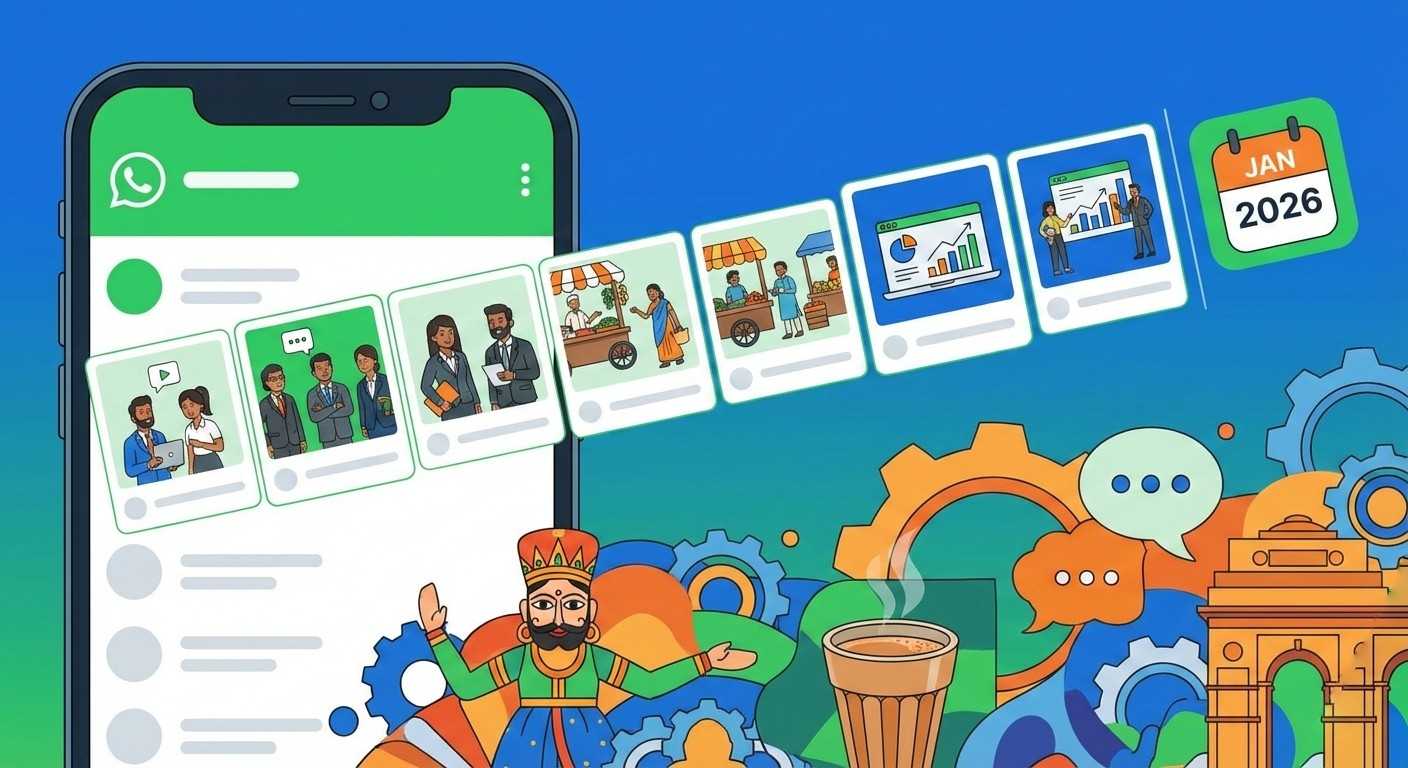
Top 10 WhatsApp Status Updates for Business Storytelling in India (January 2026)
Souvik Karmakar
7th January 2026
Why Are Businesses Using WhatsApp Status for Storytelling in 2026?
Businesses now struggle with attention everywhere today, because people scroll fast and pause rarely. Ads feel loud and unwanted, while trust feels fragile and is earned slowly. WhatsApp Status feels different for many users because it feels personal and familiar daily. People open WhatsApp without resistance, so stories seen there feel natural and honest. Businesses noticed this quiet shift clearly, and they adapted without chasing trends blindly. Storytelling through Status respects user space, and it builds memory without pressure or force. Fresh starts invite reflection and planning, so this blog explains how storytelling works with practical business-aligned usage. It emphasizes the importance of status today and how to make good use of it.
What Are WhatsApp Status Updates for Business?
WhatsApp Status updates share short visual stories, and these stories stay visible for one day. They appear beside personal contact updates, so business Status feels less intrusive. It does not interrupt conversations directly, but it supports photos, videos, and text links. For business accounts, this space matters because it acts as a silent brand layer. People view without obligation or reply, so this passive format increases comfort. Businesses using a WhatsApp Business service provider extend this value, because Status supports brand warmth quietly. It strengthens recognition through repetition, and it works best when used thoughtfully.
How Does WhatsApp Status Work for Business Accounts?
Business accounts publish Status manually, and each update reaches saved contacts. There is no algorithmic filtering here, so visibility depends on relationship strength. Content appears chronologically and naturally, while viewers consume stories casually and quickly. Replies remain optional always, which reduces interaction pressure greatly. Analytics remain basic but useful because businesses track views and responses. This helps refine storytelling gradually over time.
How Is Business Storytelling Different From Promotion?
Promotion pushes offers and urgency, while storytelling shares moments and meaning. Storytelling focuses on people and purpose, and it avoids aggressive calls always. This builds trust slowly over time, so trust improves later conversion quality. Storytelling supports WhatsApp Business API campaigns later, because it prepares the audience emotionally first. This difference defines long-term success clearly.
Why Do WhatsApp Status Updates Matter for Indian Businesses in 2026?
India remains mobile-first in behavior, and WhatsApp dominates daily communication habits. Users open it repeatedly without thought, which creates consistent brand exposure opportunities. Status fits short attention patterns well, because it respects limited mental energy. Businesses gain familiarity without noise, while customers expect human brands in 2026. They value transparency and consistency, so Status supports this expectation gently. It works across languages and regions, and it supports local relevance easily.
How Status Updates Fit Indian Mobile Usage Behavior
Indian users check their phones frequently, and Status viewing happens during idle moments. Short content suits this habit perfectly, while visual stories process faster than text. This increases completion rates naturally, so businesses benefit from passive attention. It feels effortless for users always.
Why January Is a Strategic Month for Storytelling
January signals renewal and planning, while businesses reset goals and messaging. Customers reflect on needs quietly, so stories during January feel timely. Vision stories resonate deeply now, and consistent January storytelling sets the tone. It shapes perception for months ahead naturally.
How Does Business Storytelling Through WhatsApp Status Work?
Storytelling through Status follows rhythm, and it avoids randomness and clutter. Each update supports a narrative, while the narrative unfolds across days. Businesses focus on clarity and honesty because stories connect when they feel grounded. Overproduction reduces authenticity quickly, so simple visuals often work better. Consistency builds expectation and trust, which sustains attention over time.
What Makes a Good Business Story on WhatsApp?
Emotion
Emotion anchors memory strongly, so stories should reflect shared experiences. Simple human moments work best because joy, effort, progress, as well as honesty matter simultaneously.
Context
Context must appear immediately, because viewers decide within seconds. Clear visuals help understanding fast, while confusion leads to skipping.
Consistency
Consistency signals reliability, and regular posting builds familiarity. Irregular updates reduce recall, so rhythm matters more than volume.
How Often Should Businesses Post Status Updates?
One update feels minimal daily, while two updates feel balanced. Three updates feel active but controlled, while more updates often feel excessive. Less feels forgettable sometimes, so consistency matters most here.
Top 10 WhatsApp Status Update Ideas for Business Storytelling
This section explains practical storytelling ideas, and each idea supports trust and recall. These ideas work well in January, and they suit Indian business contexts. Each idea avoids hard selling while each idea builds narrative depth gradually.
1. New Year Business Vision Story
This story explains direction clearly, while it shares intent, not promises. Businesses explain what matters this year, and they explain why choices exist. Visuals remain simple and sincere, while text stays calm and reflective. Viewers understand priorities without pressure, so this story builds leadership perception. It aligns teams and customers emotionally, and it works best in early January.
Story elements include
- A short opening vision statement
- A visual showing the work environment
- A closing line expressing commitment
2. Behind-the-scenes Work Culture Moment
This story shows daily operations, and it reveals the effort behind outcomes. People trust visible processes more, so candid photos feel honest. Short clips show teamwork naturally, which builds emotional connection slowly. It humanizes the brand deeply, so viewers feel familiarity over time.
Story elements include
- Team working quietly together
- Tools, processes, or routines shown
- A simple caption explaining the context
3. Customer Success Snapshot
This story highlights real outcomes, and it avoids exaggerated claims. Businesses share before and after moments while they explain the impact simply. This builds social proof subtly, so it feels informative, not promotional. Trust increases through realism steadily.
Story elements include
- A real result shown visually
- A short context explanation
- Gratitude expressed respectfully
4. January Offer Explained as a Story
This story reframes promotions gently because businesses explain why the offer exists. They connect it to customer needs, so the offer feels helpful, not pushy. Story context improves acceptance, and conversion improves through understanding.
Story elements include
- A problem introduction
- A solution explanation
- An offer shared calmly
5. One Day at Work Narrative
This story follows a daily flow, so it shows start, middle end. Viewers understand business rhythm, while transparency builds comfort quickly. It reduces perceived distance, and this works well for services.
Story elements include
- Morning setup visual
- Midday work snapshot
- Closing reflection moment
6. Team Introduction Story
This story introduces people simply, because names, roles, and smiles matter. Faces build trust faster than logos, so repeated introductions strengthen recognition. It humanizes service interactions later.
Story elements include
- Individual team portraits
- Short role descriptions
- Friendly welcoming text
7. Business Problem to Solution Story
This story educates quietly while it explains common challenges. It shows how solutions work, so this builds authority without selling. Viewers learn something useful, and trust grows through clarity.
Story elements include
- A problem statement
- A process explanation
- A solution outcome
8. Seasonal Relevance Story for January
This story ties to renewal themes, and it reflects planning improvement discipline. It feels timely and thoughtful, so seasonal alignment increases engagement. Viewers relate emotionally.
Story elements include
- New beginnings visual
- Reflection message
- Forward-looking note
9. Brand Values in Action Story
This story shows values practiced, while it avoids value statements alone. Action builds credibility, so small examples work best. Consistency reinforces belief over time.
Story elements include
- A real value moment
- A brief explanation
- A closing reflection
10. Short Educational Business Tip Story
This story teaches something small, because education builds authority steadily. Tips feel helpful, not promotional, so repeated learning builds trust.
Story elements include
- A clear problem tip
- A simple solution
- A practical takeaway
Who Should Use WhatsApp Status Storytelling in 2026?
Small businesses benefit greatly here, while local brands gain recall cheaply. Growing startups build early trust, and service providers show reliability. Marketers support WhatsApp Business API campaigns, while businesses working with a WhatsApp Business service provider gain structure. Status complements automation and messaging well, so it suits relationship-driven industries best.
Real World Use Cases of WhatsApp Status Storytelling in India
Retail brands share arrivals daily, while service brands show ongoing work. Clinics show process transparency, and B2B brands show milestones carefully. These stories reduce buyer hesitation because they create familiarity before contact. Status supports long sales cycles quietly.
What Are the Limitations of WhatsApp Status for Business?
Status content disappears quickly, so important messages need repetition. Overposting causes fatigue, while poor visuals reduce credibility. Status cannot replace direct messaging, so it works best alongside WhatsApp Business API campaigns. Automation and segmentation remain essential, while Status supports, not replaces, strategy.
What Is the Future of WhatsApp Status Storytelling After 2026?
Story-driven messaging will grow stronger because users increasingly resist interruption. Status will integrate analytics deeper, while AI personalization will improve relevance. WhatsApp Business service providers will enable better insights, so businesses mastering storytelling now gain an advantage. The future favors trust builders.
How Businesses Can Start Using WhatsApp Status Stories Today?
Start with clarity always, and choose consistency over perfection. Tell real stories patiently, while observing responses and refining. Align Status with broader messaging, because growth follows trust naturally.
Views (24)
Comments (0)
Duration (0)




.jpeg)


 Facebook
 Instagram
 WhatsApp
 Linked in
 Twitter
 Reddit
Comments (0)
Write a Comment